
UGREEN on Television
Filipe Boni on Opinião Litoral: sustainability and urban exclusion on the agenda
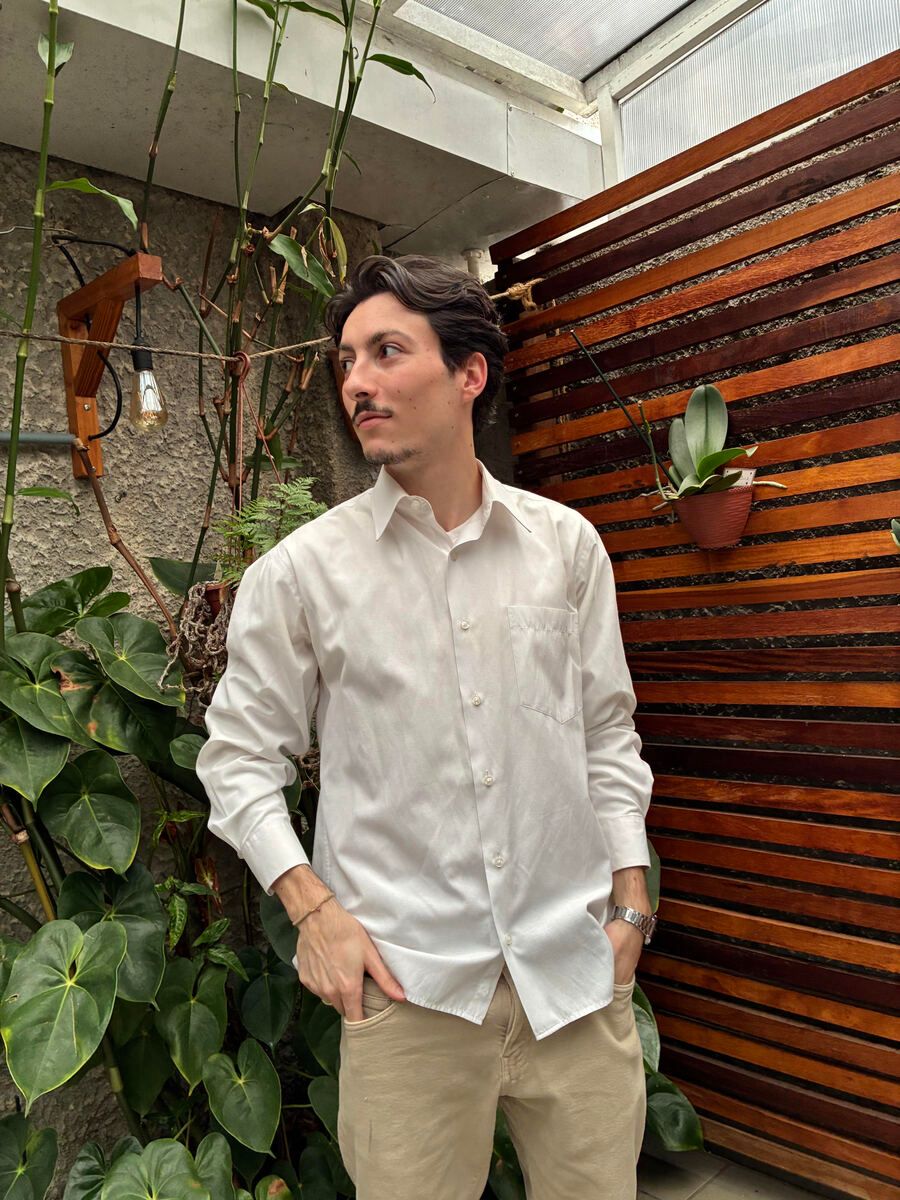
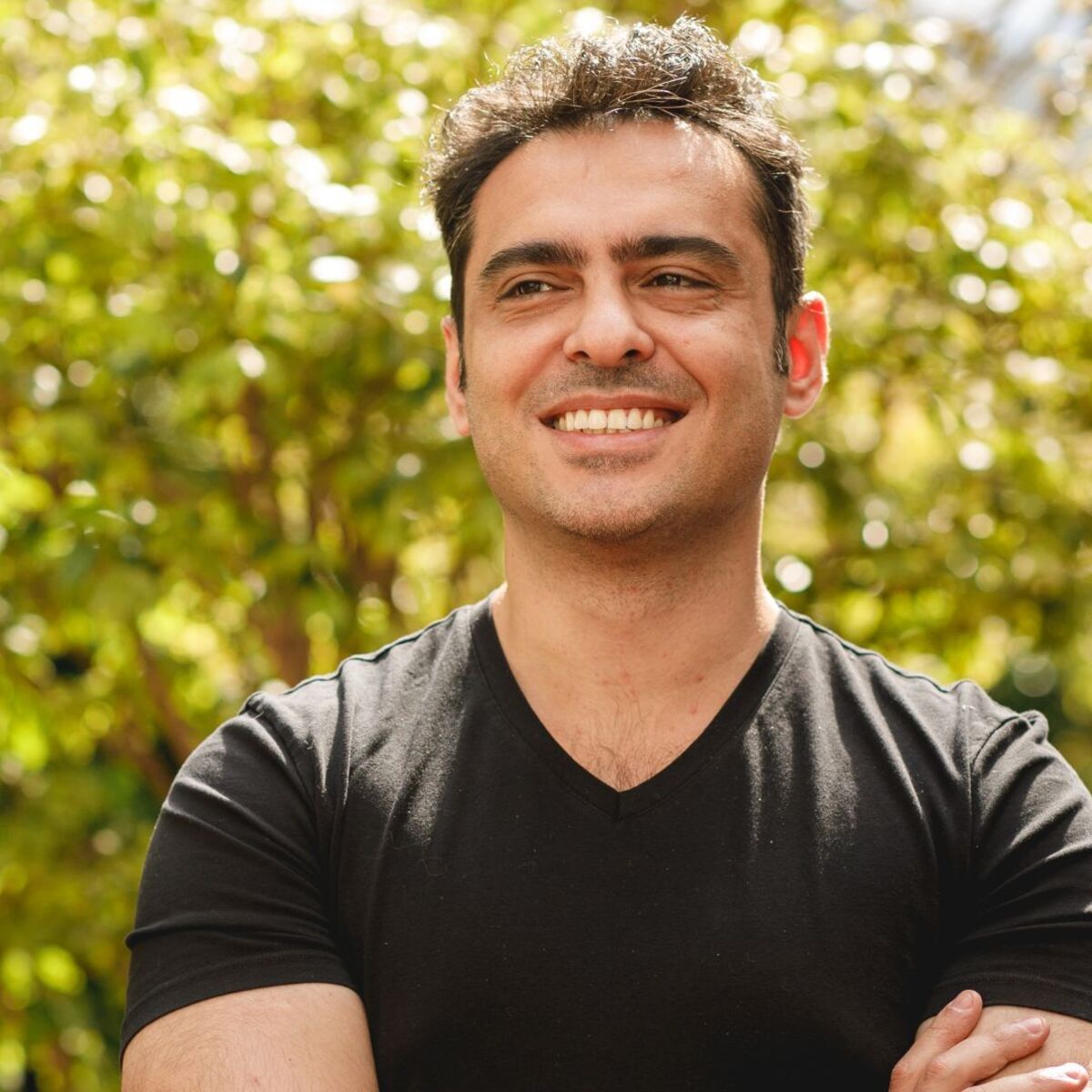
A few weeks ago, on March 13th, our founder and architect-urbanist Filipe Boni was invited to take part in an interview on Opinião Litoral, a Brazilian program on TV Cultura Litoral. Throughout the episode, topics ranged from workspaces to the urban planning of Brazilian cities.
Architecture of Humiliation was the first subject. Filipe explained how urban design penalizes those who depend on public transportation. Workers who commute long distances every day face a concrete disadvantage compared to those who live close to work. Urban space, in his view, is not neutral - it excludes rather than includes.
On the topic of verticalization, Boni pointed out that coastal cities like Balneário Camboriú and Santos are concentrating increasingly tall towers on land that the urban infrastructure simply cannot support - resulting in declining air quality, strain on public services, and properties purchased as investments rather than homes.
The renowned architect also drew a connection between the occupation of high-risk areas and the environmental disasters that have struck Brazil in recent years. In his view, floods and landslides worsen when real estate speculation pushes vulnerable populations into unstable regions. The absence of investment in prevention turns foreseeable risks into inevitable tragedies.
Finally, he argued that sustainability in construction does not drive up costs. When applied from the very beginning of a project, it can actually reduce them. Urban planning, transportation, and architectural design are, for him, the three essential fronts for transforming Brazilian cities.
If you’re interested in these discussions, we’d like to invite you to watch the full episode!
Disclaimer: The video is in Brazilian Portuguese, but simultaneous translation and subtitles are available in multiple languages.
UGREEN
Those who study sustainability in practice come out ahead!
Sustainability has become a market requirement, and those who are already prepared will always be one step ahead!
And you already know that UGREEN Pass was created exactly for that: turning knowledge into practice, and practice into a competitive edge.
For a limited time, take advantage of Consumer Month!
Over 25 certified courses and 400+ hours of content covering: Sustainable Architecture, Biophilic Design, Energy Efficiency, Sustainable Interiors, and much more!
All content organized into structured learning tracks so you can progress in a clear and focused way:

For only US$ 197, you get 1 year of access to UGREEN Pass!
But act fast, this offer ends on March 31st, so don’t miss out on this special deal!
News
A 1970s library becomes one of the world’s most sustainable buildings
A global peace organization has transformed an abandoned building in Iowa into only the second existing structure on the planet to earn the construction industry’s most rigorous sustainability certification.
The Stanley Center for Peace and Security, headquartered in Muscatine, Iowa, has completed the retrofit of its new home, the former Musser Public Library, built in the 1970s and long since decommissioned.
The project, designed by Neumann Monson Architects, received certification under the Living Building Challenge (LBC), a standard that requires buildings to produce more energy than they consume, treat their own water on-site, and use only materials free of toxic substances.
The results speak for themselves: 340 solar panels on the roof generate 110% of the building’s energy needs. A rainwater harvesting system diverts over 100,000 gallons (approximately 380,00 liters) per year into internal cisterns, supplying 100% of the building’s water needs, from faucets to toilets. No connection to the municipal water or energy grid is required.
The decision to retrofit rather than demolish and rebuild proved decisive for the project’s environmental impact: 94% of the building’s original mass was preserved, avoiding carbon emissions equivalent to the absorption capacity of 560,000 trees.
The project is significant because it challenges a well-established assumption in construction: that maximum sustainability requires building from scratch. With buildings accounting for roughly 40% of global energy consumption, demonstrating that existing structures can be transformed into positive climate assets opens a replicable path for cities around the world that need to modernize their built environment without expanding their carbon footprint.
The Stanley Center is on track to become the first fully certified Living Building in Iowa and only the second existing building project in the world to achieve this distinction.
Video
The most famous house in the world was falling apart!
Fallingwater is celebrated as the greatest example of organic architecture. Concrete slabs cantilevered over a waterfall. Nature and construction in harmony.
That image is partially false.
During construction, the engineers warned Frank Lloyd Wright: the design was structurally undersized. He ignored them. He threatened to walk away from the project if the design were changed. The builders doubled the amount of steel reinforcement without his knowledge. Even so, when the formwork was removed in 1936, the slab had already begun to deflect.
By 1995, the cumulative deflection had reached 18 cm. The house was on the verge of collapse. In 2002, post-tensioning cables were installed beneath the living room floor, with the stones numbered and removed one by one.
The house that was meant to grow from the rock itself only remains standing because of heavy industrial engineering applied decades later. And a 2024 restoration came with a 4 million dollars price tag.
Want to dive deeper into this topic?
Watch the full video on YouTube and understand the calculation errors, the moisture problems, the economic context of the construction, and what Fallingwater really says about sustainability in architecture!
Disclaimer: The video is in Brazilian Portuguese, but simultaneous translation and subtitles are available in multiple languages.
